
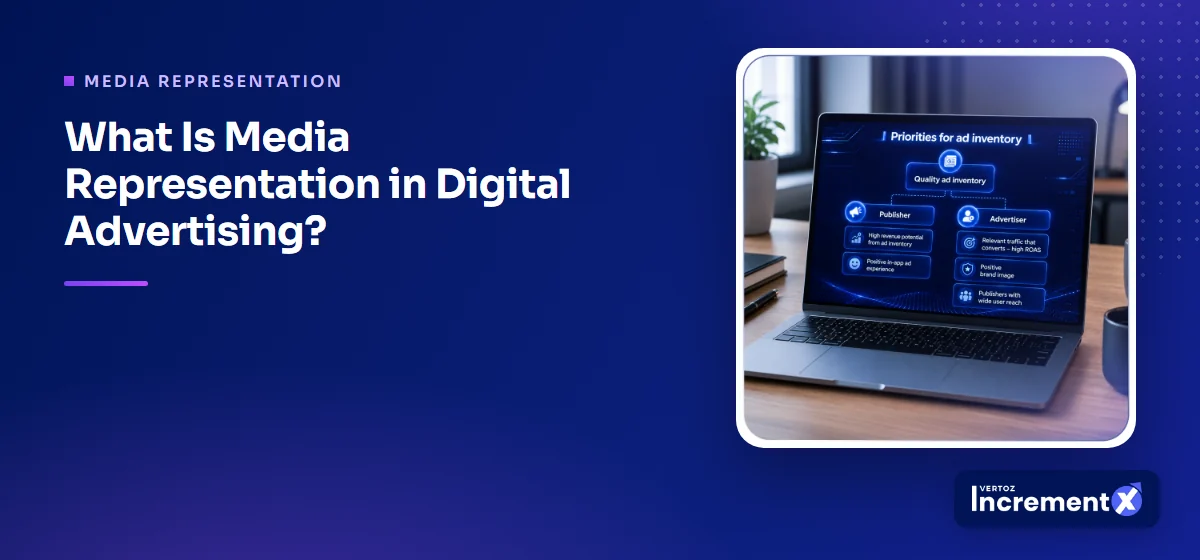
Media representation in digital advertising is when a specialist partner sells, packages and promotes a media owner's ad inventory to advertisers and agencies on that owner's behalf. The publisher keeps ownership of its audience and content, while the representation partner brings sales reach, demand relationships and the technology needed to turn that inventory into revenue. Put simply, a rep partner acts as the publisher's commercial voice in markets and buying channels it cannot cover alone.
Where did media representation come from?
Representation is older than the internet. For decades, newspapers, magazines, radio stations and TV broadcasters used outside sales firms, often called sales houses or rep firms, to sell their advertising space in markets where they had no sales team of their own. A regional broadcaster, for example, might rely on a rep firm to speak to national advertisers and agencies in a capital city it had no office in.
The logic was simple. Building a sales team in every market is expensive, and big buyers prefer fewer, trusted points of contact. A rep firm could carry several media owners into the same agency meetings, explain each one's audience and negotiate on its behalf, usually for a share of the revenue it brought in.
When advertising moved online, much of that relationship-led selling gave way to automated buying. Ad networks and later programmatic exchanges made it possible to buy huge amounts of inventory without talking to anyone. That was efficient, but it also meant many publishers became one anonymous seller among thousands. Representation came back into focus because publishers realised that automation alone rarely explains why their audience or content is worth paying more for.
How does media representation work today?
Digital representation keeps the old idea, a partner who speaks for the media owner, and adds the tools of modern ad tech. It usually covers four areas of work.
Understanding the inventory
The partner starts by learning what the publisher actually has: the audience, content categories, geographies, devices, ad formats, placements and the quality signals buyers care about, such as viewability (whether an ad had a real chance to be seen). This step matters because you cannot sell what you cannot describe clearly.
Mapping it to demand
Next, the partner works out which advertisers, agencies and buying platforms are likely to value that inventory. A finance publisher and a gaming app attract very different buyers. Demand mapping is about putting the right inventory in front of the right budgets, rather than sending everything to every buyer.
Packaging the inventory
Raw inventory is hard to buy. Representation turns it into something a buyer can act on: a package by audience, by context, by format or by campaign goal. Packages are often sold as curated deals, meaning a selected bundle of inventory offered to particular buyers under agreed terms.
Activating the deal
Finally, the partner helps the deal go live. Some deals are sold directly. Many are activated programmatically through a private marketplace (an invite-only auction for selected buyers) or programmatic guaranteed (a fixed-price, reserved deal delivered through programmatic pipes). Either way, the buyer usually receives a deal ID, a reference code that lets its buying platform find and bid on the agreed inventory.
What does a representation partner actually do day to day?
The work is more practical than the label suggests. A good partner will typically:
- Pitch the publisher's inventory to agencies, brands and programmatic buyers.
- Answer buyer questions about audience, brand safety, formats and measurement.
- Set up and manage deals, and watch whether they deliver as planned.
- Review pricing, floor prices (the lowest price the publisher will accept) and demand competition.
- Report back to the publisher on what is selling, what is not and why.
- Flag technical or supply chain issues that put off buyers, such as missing ads.txt entries.
None of this replaces the publisher's own knowledge. The publisher knows its audience and editorial direction better than anyone. The partner adds market knowledge and buyer access on top.
Example (illustrative)
A mid-size travel publisher has a loyal audience that plans trips months ahead, but most of its revenue comes from open auction display ads at whatever price the market sets that day. A representation partner studies its inventory, packages the trip-planning content into a contextual travel bundle with video and high-impact placements, and offers it to travel and hospitality buyers through private marketplace deals. The publisher still runs its open auction in parallel, but now part of its inventory is sold as a named, premium product rather than anonymous supply.
Who is media representation for?
Representation fits many types of media owner, though for slightly different reasons:
| Media owner | Why representation can help |
|---|---|
| Web publishers | Turn quality content and audience into packaged, premium deals instead of relying only on open auction |
| App developers | Reach brand and performance buyers beyond the default demand in an ad mediation setup |
| CTV and OTT platforms | Access premium video budgets that are often bought through direct and curated deals |
| Niche-audience publishers | Explain a specialist audience to the buyers who value it most |
| High-traffic publishers | Add direct and curated demand alongside existing programmatic partners |
The common thread is a gap between what the inventory is worth and what it currently earns, usually because buyers do not know about it or cannot easily buy it.
How is representation different from a sales tool or platform?
This is a common source of confusion. A supply-side platform (SSP) is software that helps publishers sell inventory through automated auctions. It is valuable, but it is a pipe. It does not usually go out and argue for a specific publisher's value, build custom packages or chase new buyer relationships.
Representation sits a level above the pipes. It uses technology, including SSPs, header bidding and deal tools, but its job is commercial: getting the right demand to the publisher's inventory on the right terms. Our comparison of publisher representation vs. traditional ad monetization goes into the tradeoffs in more detail.
Where is media representation heading?
Two shifts are worth watching. First, curated and deal-based buying keeps growing as buyers look for cleaner, more transparent supply paths. That plays to the strengths of representation, which is built around curated access rather than bulk volume.
Second, AI is starting to change how inventory is discovered and bought. Buying agents, software that can search for and evaluate media on an advertiser's behalf, need inventory to be described in a structured, machine-readable way. Representation partners are well placed to do that description work, because they already know the inventory in detail.
The IncrementX view on representation
IncrementX is a global media representation partner, part of the Vertoz advertising ecosystem. We work with web, app, CTV and OTT publishers, video owners, premium content platforms and niche-audience publishers, and our media representation work follows the same steps described above: inventory understanding, demand mapping, inventory packaging and advertiser alignment. We then activate that work through direct demand, curated deals, private marketplaces and programmatic channels.
Technology supports this, including AI-assisted monetization intelligence and our Seller Agent, which lets authorized AI buying agents discover represented inventory and initiate deals. But the core idea is the one rep firms have always offered: a partner who understands your media and speaks for it in the market.
If you are weighing whether this model suits you, our guide to the benefits of a media representation partner and when you need one walks through the signs that it is time and what to expect in the first few months.