
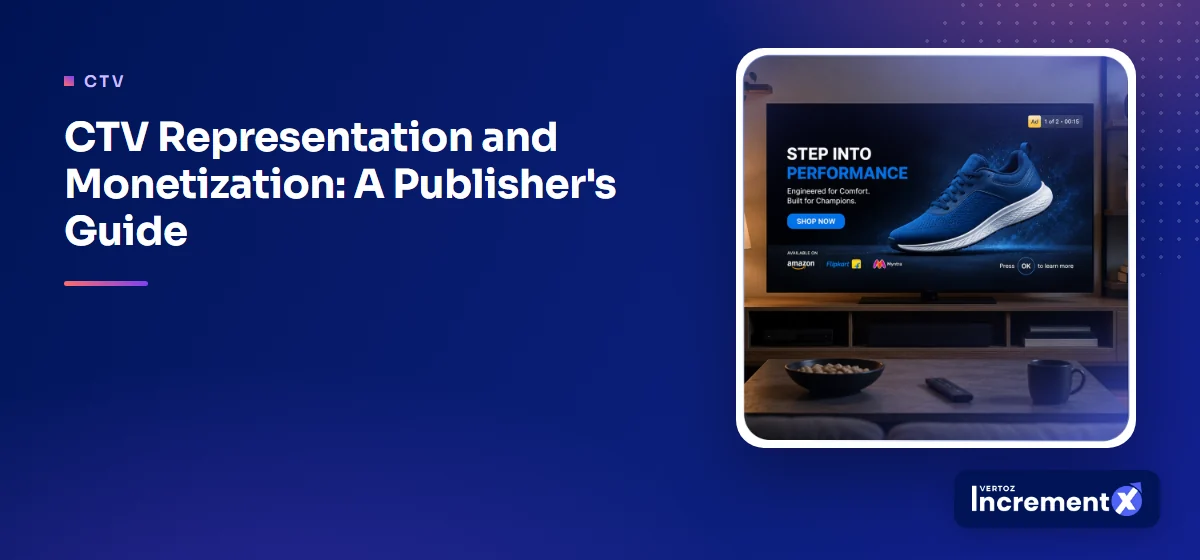
CTV representation means a partner sells and packages a streaming publisher's TV-screen inventory to advertisers on its behalf, mostly through direct, curated, private marketplace and programmatic guaranteed deals. CTV monetization is the result: turning streaming audiences into ad revenue at prices that reflect premium, full-screen video. For most CTV and OTT publishers, the hard part is not technology but access to the brand budgets that buy TV-style video.
What counts as CTV inventory?
Connected TV (CTV) means any television connected to the internet: a smart TV, a streaming stick, a games console or a set-top box. OTT, short for "over the top", describes how the content arrives: streamed over the internet instead of through cable or satellite. A streaming app on a smart TV is both, which is why the terms are so often used together.
CTV inventory is the ad space inside that streamed content. It usually comes from:
- Streaming apps that publishers run on TV platforms and app stores.
- Free, ad-supported streaming services, including on-demand libraries and linear-style channels.
- Live streams, such as news, sport or events, where ad breaks happen in real time.
- Video owners who distribute their content across several streaming platforms.
Which CTV ad formats can publishers sell?
The classic CTV format is in-stream video, the ad break you see before, during or after content. But CTV inventory is broader than that. Formats publishers commonly offer include:
| Format | What it is |
|---|---|
| In-stream video | Video ads that play in ad breaks within the content |
| Overlay | A smaller ad shown over part of the screen while content plays |
| Home screen | Placements on the app or platform's home or browse screen |
| Live streaming | Ads inserted into live broadcasts and events |
| Interactive | Ads that let the viewer respond, for example by choosing an option with the remote |
Offering more than one format gives buyers more ways to work with you and helps publishers sell inventory that would otherwise go unused, such as home screen space.
Why premium video demand buys differently
CTV advertising attracts budgets that once went mostly to traditional TV. Those buyers are used to knowing exactly which shows and channels their ads run in, at what price, and how often a household sees them. They tend to be careful about brand safety and want reporting they can trust.
That changes how CTV inventory is sold. Open auction exists in CTV, but much of the premium video demand prefers deals that give buyers more certainty and publishers more control. Our post on the rising impact of CTV and OTT ad spending looks at why budgets have been moving to streaming.
Direct, curated, PMP and PG: which deal types fit CTV?
Direct deals
The publisher, or its representation partner, agrees terms directly with an advertiser or agency. Direct deals suit sponsorships, tentpole events, live content and custom formats.
Curated deals
A curated deal is a hand-selected bundle of inventory, for example a package of family entertainment content across several streaming apps, offered to suitable buyers. Curation helps smaller CTV publishers reach budgets that need scale. Our article on curated deals for publisher monetization explains the model in detail.
Private marketplace (PMP)
A private marketplace is an invite-only auction. Selected buyers bid on specific inventory, and the publisher sets a floor price. It keeps price discovery while limiting who can buy.
Programmatic guaranteed (PG)
Programmatic guaranteed reserves inventory for one buyer at a fixed price and agreed volume, delivered through programmatic tools. It is the closest programmatic equivalent to a traditional TV booking. For a fuller comparison, see why CTV publishers need PMP and PG deals.
Example (illustrative)
A regional streaming service offers local news, lifestyle shows and a weekly live sports stream. Its open auction fill is patchy and prices swing week to week. A representation partner reviews the inventory and proposes three packages: a programmatic guaranteed deal around the live sports stream for a single sponsor, a private marketplace deal for lifestyle content aimed at retail and food buyers, and home screen placements sold directly. The open auction stays in place for remaining inventory. The publisher now has predictable revenue from the live stream and a clearer picture of what each content type is worth.
What are the measurement realities in CTV?
Measurement is where CTV differs most from web advertising, and publishers who understand this sell better.
- Households, not individuals. A TV is usually shared, so audiences are often described at household level rather than person level. There are no third-party cookies to rely on.
- Completion matters. Video completion rate, the share of ads watched to the end, is one of the main signals buyers look at. Full-screen, often non-skippable ads tend to complete well, but buyers still want proof.
- Server-side ad insertion. Many streams stitch ads into the video on the server. This gives viewers a smoother experience but can make some ad verification harder, so clear reporting from the publisher side matters.
- Supply chain checks. Buyers check that inventory is sold by authorised sellers. App-based CTV inventory relies on app-ads.txt, the app version of ads.txt, and buyers also look at sellers.json and the supply chain object to see who is in the path.
- Fraud risk. CTV's higher prices make it a target for invalid traffic, such as spoofed devices or fake apps. Publishers with clean, verifiable supply have a real advantage.
Implementation note
Before taking CTV inventory to buyers, check that your app-ads.txt file is live, lists every authorised seller and matches what your partners declare. Gaps here are one of the most common reasons premium buyers cannot transact.
CTV representation vs. the CTV channel page
IncrementX has two related pages, and they do different jobs. The CTV channel page describes the CTV ad formats and deal options IncrementX supports: overlay, in-stream video, home screen, live streaming, interactive and direct deals for premium video. In short, it answers "what can be bought on CTV through IncrementX?"
CTV representation is the service for media owners. It covers representing a streaming publisher's inventory in the market: understanding it, mapping it to demand, packaging it and aligning it with advertisers. It answers "how will IncrementX help my CTV inventory earn more?"
How IncrementX represents CTV and OTT publishers
IncrementX works with CTV and OTT publishers, video owners and premium content platforms as a global media representation partner. We start with inventory understanding, then map that inventory to the brands, agencies, DSPs and trading desks that buy premium video. From there we package it into direct deals, curated deals, private marketplaces and programmatic guaranteed deals, including CTV and video curation packages built around campaign goals. Represented CTV inventory can also be made discoverable to authorized AI buying agents through IncrementX Seller Agent.
Our AI-assisted monetization intelligence looks at signals such as completions, fill rate, eCPM, demand response and floor performance to support pricing and format decisions. Representation remains the core: making sure the buyers who value streaming audiences know what your inventory offers and can buy it on terms that work for you.